The Studio
Learn Spanish
The friendliest, most complete guide to learning Spanish on the internet. Start speaking today, even if your vocabulary is three words and a smile.

Learn Spanish
Start right now
Don't just read about Spanish. Practice Spanish with the Enrique bot right now. Enrique will chat with you in Spanish, at your level, and help you learn: vocabulary, corrections, conversation practice, questions answered. Open the chat and say hola. That's your first lesson, and it starts this second.
Chat with Enrique nowFree, friendly, and patient. Enrique never judges your accent and never gets tired of your questions.
First things first
Why Spanish is the best language to learn
If you are going to learn one new language in your life, Spanish is the one. It is not close. Spanish gives you the biggest return on every hour you invest, and it is the most forgiving major language for an English speaker to learn.
The practical case
Spanish is spoken by more than 600 million people across Spain, Mexico, all of Central America, most of South America, the Caribbean, and over 40 million people in the United States. Learn Spanish and you can travel from Madrid to Mexico City to Buenos Aires and be understood everywhere. That is an entire hemisphere of people, food, music, and friendship unlocked by one language.
For English speakers, Spanish is officially a Category I language, the easiest category there is. Compare that to the roughly 2,200 hours a language like Mandarin or Arabic takes. Spanish is genuinely, measurably easier than most of the world's languages.
The joyful case
Spanish is the language of reggaetón and salsa, of Gabriel García Márquez and Isabel Allende, of telenovelas and football chants, of long dinners that turn into longer conversations. When you learn Spanish you are not just memorizing verb charts. You are joining a culture that loves to talk, to laugh loudly, and to welcome you to the table. Every Spanish speaker you meet becomes a potential teacher and a potential friend.
Your reason is your fuel. Write down, in one sentence, why you want to learn Spanish. Tape it somewhere you will see it daily. When motivation dips (it will, around week six), that sentence is what gets you back in the chair.

Before you start
The mindset that actually works
Most people fail at languages for the same reason most people fail at the gym: they try to be perfect instead of consistent. Here is what actually works, backed by everyone who has ever gotten fluent.
1. Consistency beats intensity, every time
Fifteen minutes every day beats five hours every Saturday. Your brain builds language the way it builds muscle: with daily reps and sleep in between. The person who does a little every day will pass the weekend warrior within three months, guaranteed.
2. Mistakes are the method
You will say embarrassing things. Everyone does. Say them anyway. Every mistake you make out loud is a lesson your brain will never forget. The learners who progress fastest are not the smartest, they are the least embarrassed. Give yourself full permission to be terrible at first. Being terrible is the entrance fee, and it is nonrefundable.
3. Comprehension comes before production
For the first few weeks, you will understand more than you can say. That is completely normal and it is a good sign. Babies listen for a year before they talk. You have already done years of listening to language patterns in English. Trust the process: input first, output follows.
4. Learn the language, not about the language
Grammar is a tool, not the goal. The goal is to order coffee, make a joke, and understand the answer. If you find yourself reading about the pluperfect subjunctive in month one, close the tab and go have a conversation with Enrique instead. You can always learn the rule later. You cannot learn courage from a textbook.
5. Celebrate everything
Your first full sentence in Spanish is a miracle. Your first dream in Spanish is a party. Your first joke that lands is a career highlight. Fluency is not one big moment, it is ten thousand small wins. Notice them.

Step one
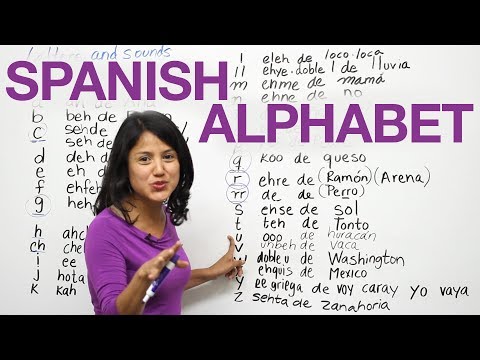
Pronunciation first: every Spanish sound
Here is the best news in this entire guide: Spanish pronunciation is almost perfectly regular. Once you learn the rules, which takes about one focused week, you can correctly pronounce any word you see. English has silent letters, weird vowels, and chaos. Spanish has a deal: learn the sounds once, use them forever.
The five vowels (your superpower)
Spanish has five vowel sounds and they never change. Not ever. Learn these and you are already 80 percent of the way to a good accent.
Say them in order, slowly: a, e, i, o, u. That is the whole vowel system. Practice words like murciélago (bat), which contains all five vowels in order. Show off with that one at parties.
The consonants
Most Spanish consonants sound like their English cousins. Here are the ones that differ:
- j is a throaty "h", like clearing your throat gently: jugo (juice), rojo (red). The letter g before e or i does the same thing: gente (people).
- ll is a "y" sound in most of the Spanish-speaking world: llamo sounds like "yah-mo". (In Argentina and Uruguay it is more like "sh": llamo becomes "shah-mo".)
- ñ is the "ny" in "canyon": niño (boy), mañana (tomorrow).
- h is always silent: hola is "oh-lah", hablar is "ah-BLAR".
- z in Latin America is an "s" sound: zapato is "sah-PAH-toh". In most of Spain it is a soft "th": "thah-PAH-toh". Both are correct, pick your region.
- c before e or i follows the same rule as z. Before a, o, u it is a hard "k": casa ("kah-sah").
- v and b are nearly identical in Spanish, a soft blend of the two: vaca and baca would sound almost the same.
- d between vowels is very soft, almost like the "th" in "this": todo sounds like "toh-thoh".
- qu is always "k": queso (cheese) is "keh-soh". gue/gui are "geh/ghee": guerra, guía.
The famous rolled R
Spanish has two r sounds. A single r between vowels is a quick tap, like the "tt" in the American pronunciation of "butter": pero (but). A double rr, or an r at the start of a word, is the rolled trill: perro (dog), rojo (red).
Can't roll your r yet? Completely normal. Here is how to learn it:
- Say "butter" fast, over and over: buh-duh, buh-duh. Feel that tongue tap? That is the single r.
- Now say "dra" and relax your tongue tip behind your upper teeth. Blow air through. Let the tongue flutter. It will feel ridiculous. That is correct.
- Practice with erre con erre cigarro, erre con erre barril, the classic tongue twister. Speed comes with weeks, not days.
Honest truth: you can be perfectly understood without a rolled r. Plenty of native speakers, especially in parts of Latin America, barely trill it. It is a nice-to-have, not a gatekeeper. Don't let it slow you down.
Stress and accent marks
Spanish has simple stress rules, and the written accent mark (á, é, í, ó, ú) exists to tell you when a word breaks them:
- Words ending in a vowel, n, or s are stressed on the second-to-last syllable: casa (CAH-sah), hablan (AH-blahn).
- Words ending in any other consonant are stressed on the last syllable: hotel (oh-TEL), feliz (feh-LEEZ).
- An accent mark overrides everything and marks the stressed syllable: teléfono (teh-LEH-foh-noh), canción (cahn-SYON).
Accents also distinguish meaning: si (if) vs sí (yes), tu (your) vs tú (you), el (the) vs él (he). Learn to write them, they matter.
Your starter kit
The 100 most useful words and phrases
You don't need 5,000 words to start having real conversations. You need the right hundred. These are the words and phrases Spanish speakers actually use every day. Learn them in order and you will be shocked how fast you can communicate.
Greetings and basics
Survival phrases
The little words that run everything
These small connector words appear in nearly every sentence. Learn them early and everything gets easier.
People and everyday nouns
Describing words you will use constantly
Question words (learn these cold)
Numbers 1 to 20
Then it gets easy: 30 treinta, 40 cuarenta, 50 cincuenta, 60 sesenta, 70 setenta, 80 ochenta, 90 noventa, 100 cien. Thirty-one is treinta y uno. You can count to 100 with about ten words.
Your first homework: memorize the greetings, the survival phrases, and the question words. That is about 30 items. With just those, you can walk into any Spanish-speaking restaurant, greet everyone, ask for what you want, and ask questions. Try it on Enrique tonight.

Grammar, the friendly way
Core grammar made simple
Grammar has a scary reputation it does not deserve. Spanish grammar is logical, regular, and learnable in layers. Here are the layers that matter, in the order that matters. You do not need all of this at once. Read it, then focus on one layer per week.
Everything has a gender (and it is not hard)
Every Spanish noun is masculine or feminine. The article (the word for "the") changes to match: el for masculine, la for feminine.
The shortcut that works 95 percent of the time: nouns ending in -o are masculine, nouns ending in -a are feminine. Learn every new noun with its article (la silla, not just silla) and gender becomes automatic within a month.
Plurals are easy: add -s after a vowel, -es after a consonant. El libro becomes los libros. La mujer becomes las mujeres. The articles: el, la, los, las (the), un, una, unos, unas (a, some).
Present tense: the three verb families
Almost every Spanish verb ends in -ar, -er, or -ir. To conjugate, drop the ending and add the new one. That is the entire system. Here it is:
| -ar: hablar (to speak) | -er: comer (to eat) | -ir: vivir (to live) | |
|---|---|---|---|
| yo (I) | hablo | como | vivo |
| tú (you, informal) | hablas | comes | vives |
| él/ella/usted | habla | come | vive |
| nosotros (we) | hablamos | comemos | vivimos |
| vosotros (you all, Spain) | habláis | coméis | vivís |
| ellos/ustedes (they) | hablan | comen | viven |
Notice that -er and -ir are nearly identical. You are really learning two patterns, not three. Also notice: because the ending tells you who is doing the action, you can drop the subject pronoun. Hablo español is complete. Nobody says yo hablo unless they are emphasizing I (as opposed to someone else).
The verbs you need most
A handful of verbs do most of the work in Spanish. These are irregular, so they are worth memorizing as complete sets. Start with these six.
ser (to be, identity) and estar (to be, state):
| ser | estar | |
|---|---|---|
| yo | soy | estoy |
| tú | eres | estás |
| él/ella/usted | es | está |
| nosotros | somos | estamos |
| vosotros | sois | estáis |
| ellos/ustedes | son | están |
tener (to have) and ir (to go):
| tener | ir | |
|---|---|---|
| yo | tengo | voy |
| tú | tienes | vas |
| él/ella/usted | tiene | va |
| nosotros | tenemos | vamos |
| vosotros | tenéis | vais |
| ellos/ustedes | tienen | van |
querer (to want) and poder (to be able to):
| querer | poder | |
|---|---|---|
| yo | quiero | puedo |
| tú | quieres | puedes |
| él/ella/usted | quiere | puede |
| nosotros | queremos | podemos |
| vosotros | queréis | podéis |
| ellos/ustedes | quieren | pueden |
Two notes: first, in that last table the nosotros/vosotros forms of querer are regular (queremos, queréis), which is a pattern you will see in many "stem-changing" verbs. Second, tener does the job of English "to be" for age, hunger, and temperature: tengo 30 años (I am 30, literally "I have 30 years"), tengo hambre (I am hungry), tengo frío (I am cold).
Ser vs estar: the famous pair
Spanish has two verbs for "to be" because it distinguishes two kinds of being. The rule of thumb:
- Ser is for identity and essence: what something is. Soy médico (I am a doctor). Es de México (He is from Mexico). Son las tres (It is three o'clock).
- Estar is for states and locations: how something is, or where it is. Estoy cansado (I am tired). Está en casa (She is at home). La tienda está cerrada (The store is closed).
That apple example is the whole distinction in one sentence. Changing the verb changes the meaning, and now you can feel why Spanish bothers with two.
Por vs para: the other famous pair
Both mean "for" (among other things). The shortcut:
- Para points forward: purpose, destination, deadlines, recipients. Para ti (for you), para mañana (for tomorrow), estudio para aprender (I study to learn).
- Por points everywhere else: causes, exchanges, movement through, durations. Por amor (for love, because of love), gracias por todo (thanks for everything), paseamos por el parque (we walk through the park), por dos horas (for two hours).
You will mix them up for a while. Native speakers mix them up when learning English prepositions too. It is a rite of passage, not a failure.
The past tense roadmap: preterite vs imperfect
Spanish has two main past tenses. Think of it like a movie: the preterite is the plot points (what happened), and the imperfect is the background scenery (what things were like).
| Preterite: hablar | Preterite: comer | Imperfect: hablar | Imperfect: comer | |
|---|---|---|---|---|
| yo | hablé | comí | hablaba | comía |
| tú | hablaste | comiste | hablabas | comías |
| él/ella/usted | habló | comió | hablaba | comía |
| nosotros | hablamos | comimos | hablábamos | comíamos |
| ellos/ustedes | hablaron | comieron | hablaban | comían |
Two traps to know: hablamos is both present and preterite for -ar verbs (context tells you), and ir and ser share the exact same preterite (fui, fuiste, fue, fuimos, fueron). Context always saves you: fui médico (I was a doctor) vs fui a la tienda (I went to the store).
The future, the easy way
Forget the future tense endings for now. Spanish speakers usually talk about the future with ir a + infinitive, exactly like English "going to":
That is the entire future for your first six months. It works everywhere and nobody will think twice.
The subjunctive, demystified (and permission to ignore it)
The subjunctive is a verb mood for wishes, doubts, and hypotheticals: quiero que vengas (I want you to come), es importante que estudies (it is important that you study). Notice vengas and estudies instead of vienes and estudias.
Here is the truth nobody tells beginners: you can be conversational without the subjunctive. For your first months, when you need it, just use the normal present tense. Quiero que vienes is technically wrong and every native speaker will understand you perfectly. Learn to recognize the subjunctive when you hear it, start using it around month four or five, and stop worrying about it entirely until then. It is seasoning, not the meal.
Building sentences: the patterns
- Word order is usually the same as English: subject, verb, object. Yo quiero café.
- Adjectives go after nouns (mostly): la casa blanca (the white house), un perro grande (a big dog).
- Negation is one word: put no before the verb. No hablo español. Double negatives are required, not wrong: No sé nada (I don't know nothing, meaning "I don't know anything").
- Questions often just raise your voice at the end. Written questions get the upside-down mark at the start: ¿Hablas español?
- Gustar works backwards: the thing you like is the subject. Me gusta el café (literally "the coffee pleases me"). Me gustan los tacos (tacos please me, note the plural). You will use me gusta a thousand times. Learn it as a chunk.
- Hay means "there is / there are": hay un banco aquí (there is a bank here). One word, both singular and plural.

Train your ear
Listening: how to understand real Spanish
Understanding native speakers is the hardest part of Spanish and the most rewarding. The gap between textbook audio and a real conversation in a noisy taqueria is enormous. Here is how to close it.
The method: active listening in layers
- First pass, no subtitles. Watch or listen and just try to catch the gist. What is the topic? Who is happy? Who is angry? Your brain is pattern-matching, let it work.
- Second pass, Spanish subtitles. Now connect sounds to words. You will be amazed how many words you "know" but didn't recognize by ear.
- Third pass, no subtitles again. Notice how much more you catch. That jump is real progress, and it happened in twenty minutes.
What to listen to, by level
- Weeks 1 to 4: Destinos (the classic learner telenovela, free online, made for students), Dreaming Spanish videos, slow Spanish podcasts. Ask Enrique for the current links.
- Months 2 to 4: Extra en español (a cheesy sitcom made for learners, genuinely fun), kids' shows dubbed in Spanish (Bluey in Spanish is a goldmine), the podcast Coffee Break Spanish.
- Months 4 to 8: La casa de papel (Money Heist) with Spanish subtitles, Las chicas del cable (Cable Girls), the podcast Radio Ambulante (Latin American stories, beautiful and clear).
- Month 8 and beyond: anything natives watch. Telenovelas, football commentary, true crime podcasts. If it is made for natives and you understand 70 percent, you are winning.
Music is a cheat code
Songs repeat the same words with melody and emotion, which is exactly how memory works best. Start with slow, clear singers: Shakira's ballads, Juanes, Natalia Lafourcade, Buena Vista Social Club. Read the lyrics in Spanish while you listen, then sing along badly and proudly. Reggaetón is fantastic for rhythm and slang once you are ready for full speed.
The 70 percent rule: pick listening material where you understand roughly 70 percent. Below 50 percent is noise and frustration. Above 90 percent is comfort and no growth. Seventy percent is the sweet spot where your brain is working hard and winning.
Shadowing: the pronunciation gym
Pick a 30-second clip of clear Spanish. Play it, pause, and repeat exactly what you heard, mimicking the rhythm, the melody, the attitude. Do it ten times. You will sound silly and your mouth will get tired. That tired mouth is your accent muscles growing. Fifteen minutes of shadowing beats an hour of passive listening.

Open your mouth
Speaking from day one (yes, really)
Speaking is a physical skill, like dancing. You cannot learn it by reading about it. The good news: you can start today, alone, with zero embarrassment.
Talk to yourself
Narrate your life in Spanish as you go. Me levanto. Me lavo los dientes. ¿Dónde están mis llaves? (I get up. I brush my teeth. Where are my keys?) You will run out of words constantly. Each time you do, look one up. That word is now yours forever, because you needed it in real life.
Talk to Enrique
This is what the Enrique bot is for. Open it and have a real conversation in Spanish at your level. Tell Enrique you are a beginner and want simple Spanish. Ask him to correct you. Ask him what words mean. Role-play ordering food, checking into a hotel, introducing yourself. There is no judgment, no waiting for a tutor, no scheduling. Just open the chat and start.
The scripts that save you
Memorize a few full sentences as unbreakable chunks, and you will always have something to say:
That last one is magic. Say it to any Spanish speaker and watch their face light up. People love helping learners. You are giving them a gift: the chance to be generous.
Find humans when you are ready
Language exchange apps pair you with native Spanish speakers who want to learn English: thirty minutes in Spanish, thirty in English. Local meetup groups and conversation clubs exist in most cities. And the bravest option: walk into a Mexican restaurant and order in Spanish. Start with para mí, los tacos al pastor, por favor and see where the conversation goes.

Read your way fluent
Reading: the quiet superpower
Reading is the fastest way to grow your vocabulary. One hour of reading exposes you to more words than one hour of conversation, and you can reread anything. Best of all, you can start reading real Spanish right here.
Start with /es/ on this very site
The Studio has a full Spanish version at /es/. It is the same content you already know, in Spanish. That is the perfect training ground: you know what it should say, so your brain can focus on how Spanish says it. Read a page in English, then read it in Spanish, then read it in Spanish again. Notice the words you recognize. Look up three new ones per page, no more.
The reading ladder
- Months 1 to 3: graded readers (books written for learners, labeled A1 and A2), children's picture books, the /es/ pages of this site.
- Months 3 to 6: news written simply (BBC Mundo, news sites with easy Spanish), song lyrics with translations, young adult novels you have already read in English.
- Months 6 to 12: real novels you love (Harry Potter y la piedra filosofal is a rite of passage), newspapers (El País from Spain, Reforma from Mexico), magazines about your hobbies.
- Year 2: whatever you want. Gabriel García Márquez. Isabel Allende. Jorge Luis Borges, if you are feeling brave. You earned it.
The three-word rule: when reading, look up a maximum of three words per page. More than that and reading becomes dictionary work and you will quit. Let the rest wash over you. Your brain is learning from context even when you don't notice.

Pen to paper
Writing: small, daily, corrected
Writing forces you to produce complete thoughts, which is exactly the skill speaking needs. But nobody wants to write essays. So don't. Write tiny.
- The three-sentence journal: every night, write three sentences about your day in Spanish. Hoy trabajé mucho. Comí tacos. Estoy cansado. Three sentences. That is the whole assignment.
- Get corrected: paste your sentences into your chat with Enrique and ask what you got wrong. Corrections on your own writing stick ten times better than corrections on textbook exercises.
- Text a friend: if you know any Spanish speaker, text them in Spanish. Short, real messages. ¡Feliz cumpleaños! counts.
Within a month, three sentences becomes five. Within three months, you are writing paragraphs. Writing is just speaking that you get to edit.

Make it stick
Spaced repetition: never forget a word again
Your brain forgets on a schedule. Spaced repetition is the cheat that beats the schedule: review a word right before you would forget it, and each time, the memory lasts longer. This is the science behind apps like Anki, and it is the single most effective vocabulary technique ever discovered.
The simple version (no app needed)
- Get a small notebook or a stack of index cards.
- When you learn a new word, write the Spanish on one side and the English on the other. Always include an example sentence: la llave: the key. ¿Dónde están mis llaves?
- Review new cards daily for a week, then weekly for a month, then monthly. Cards you always get right graduate. Cards you miss come back tomorrow.
The app version
Anki is free and does the scheduling for you. Download a shared Spanish deck or, better, build your own from words you actually encountered. Your own words beat anyone's premade list, because you met them in the wild. Ten minutes of Anki a day will quietly build you a vocabulary of thousands of words within a year.
Quality over quantity: ten deeply learned words beat fifty glanced-at words. If you can use a word in a sentence without thinking, you know it. If you only recognize it on a flashcard, you are halfway there. Use new words with Enrique the same day you learn them.

No plane ticket needed
Immersion without moving abroad
Moving to Madrid for a year would be lovely. It is also unnecessary. You can build a Spanish bubble around your current life, and it works shockingly well.
- Switch your phone to Spanish. You already know where every button is, so you will learn the words effortlessly. Ajustes (settings), mensajes (messages), cámara (camera). Free vocabulary, zero study time.
- Follow Spanish accounts. Memes, football clubs, chefs, comedians. Your social feed becomes a drip-feed of real, current Spanish.
- Cook in Spanish. Find a recipe video in Spanish and cook along. You will learn food words, commands (añade, mezcla, calienta), and you get dinner.
- Think in Spanish. When you catch yourself thinking in English, try switching. Even ten seconds of ¿qué voy a comer? is a rep.
- Date the language. Label objects in your house with sticky notes: la puerta, el espejo, la nevera. You will feel silly for a week and then you will just know the words.
- One Spanish day per week. Pick a day where everything you can do in Spanish, you do in Spanish. Journal, texts, self-talk, music. It is hard and it is the fastest week of your month.

Learn from everyone's errors
Common mistakes English speakers make
Every English speaker makes the same dozen mistakes. That is good news: you can learn them all right now, in five minutes, and skip months of confusion.
- Saying "yo" all the time. The verb ending already says who did it. Hablo español, not yo hablo español (unless you are emphasizing I did it and someone else didn't).
- Translating "I am" word for word. Estoy embarazada does not mean "I am embarrassed" (see false friends below, and please read it before you travel). Age, hunger, cold, and heat use tener: tengo 30 años.
- Adjectives before nouns. English puts them first, Spanish puts them after: la casa blanca, not la blanca casa.
- Forgetting the personal "a". When the object of a verb is a specific person, Spanish adds an a: veo a María (I see María), llamo a mi madre (I call my mother). No a for things: veo la casa.
- "La gente" is singular. La gente (the people) takes singular verbs: la gente es amable (people are friendly).
- Question intonation in writing. Written questions need the opening mark: ¿Cómo estás? not Cómo estás?
- Mixing up saber and conocer. Saber is knowing facts and skills: sé nadar (I know how to swim). Conocer is knowing people and places: conozco Madrid (I know Madrid, I have been there).
- Using estar for everything. Remember: ser for identity, estar for states and locations. Soy aburrido (I am a boring person) vs estoy aburrido (I am bored). One letter, very different evening.
- Pronouncing every letter like English. Trust the five vowels. Queso is "keh-soh", not "kweh-soh". Jalapeño is "hah-lah-PEH-nyoh".

The hall of shame
False friends: words that betray you
These Spanish words look like English words and mean something completely different. Learn them now, laugh later, instead of the other way around.
The reverse is also fun: molestar means "to bother", which is why "no molestar" hangs on hotel doors. It does not mean what it looks like. Spanish is full of these little gifts.

One language, many flavors
Regional differences worth knowing
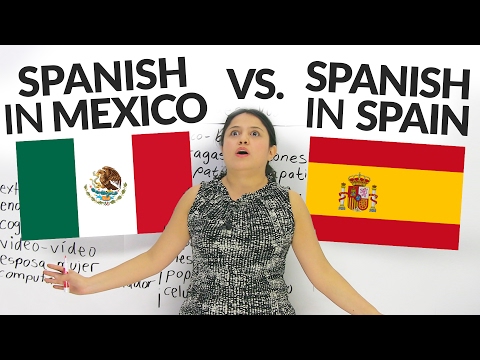
Spanish is wonderfully unified: a speaker from Madrid and a speaker from Buenos Aires understand each other fine. But there are regional flavors you should know about so nothing surprises you.
Spain: vosotros and the lisp
In Spain, the informal plural "you all" is vosotros (habláis, coméis, vivís). In all of Latin America, everyone says ustedes instead, even with friends. Learn to recognize vosotros, but if you only learn ustedes you will be understood everywhere, including Spain. Spain also pronounces z and c-before-e/i as a soft "th" (gracias becomes "gra-thyahs"), and uses different everyday words: ordenador (computer), coche (car), móvil (phone).
Mexico and most of Latin America
No vosotros, no lisp. Computadora (computer), carro or coche (car), celular (phone). Mexican Spanish is clear, warm, and full of beloved expressions like ¡órale! and qué padre (how cool). Since most US Spanish speakers have Mexican roots, this is the most useful variety to default to in the United States.
Argentina and Uruguay: vos and the "sh"
Instead of tú, they use vos: vos hablás, vos comés, vos vivís (note the stress moves to the end). The ll and y sounds become "sh": yo me llamo sounds like "shoh meh shahmoh". It is beautiful, distinctive, and completely learnable. If you visit Buenos Aires, just switch tú to vos and you will fit right in.
The Caribbean: speed and rhythm
Cuban, Puerto Rican, and Dominican Spanish is fast, musical, and drops some consonants (para becomes pa'). It is the hardest to understand at first and the most fun once you can. Save it for dessert.
Which should you learn? Mexican/Latin American neutral Spanish is the safest default: understood everywhere, most resources, most speakers near you. But honestly, pick the region you love most. Passion for a place beats optimization every time. Tell Enrique which variety you want and he will match it.
The engine room
The 15-minute daily system
You do not need an hour a day. You need fifteen focused minutes, every day, with a system. Here is one that works. Do it in order, set a timer, and stop when it rings. Done is better than perfect.
Minutes 0 to 5: Review
Flashcards (Anki or your notebook). Old words first. This is the spaced repetition that makes everything stick. No new material yet, just strengthening.
Minutes 5 to 10: New input
Learn five new words or one small grammar point. Read one short paragraph in Spanish (try a page on /es/). Look up your three words. Write one example sentence for each.
Minutes 10 to 15: Speak
Open Enrique and use today's words in a real conversation. Say them out loud, not just in your head. End by saying one thing you learned today, in Spanish: Hoy aprendí la palabra "llave".
That is it. Fifteen minutes. Do that for 90 days and you will not believe the person you have become. On days you feel like more, do more. On days you don't, do the fifteen minutes anyway. The streak is the system.

Your roadmap
30-day, 60-day, and 90-day plans
Days 1 to 30: Survive
Goal: hold a basic conversation about yourself, order food, ask for directions.
- Master pronunciation: the five vowels, the alphabet, stress rules.
- Memorize the greetings, survival phrases, and question words from this guide.
- Learn present tense of -ar verbs and the verbs ser, estar, tener, ir.
- Talk to Enrique every day, even for five minutes.
- Listen to 10 minutes of slow Spanish daily (Destinos, Dreaming Spanish).
- Numbers 1 to 100, days of the week, months.
You can say: Hola, me llamo Alex. Soy de Texas. Estoy aprendiendo español. ¿Dónde está el baño? La cuenta, por favor.
Days 31 to 60: Connect
Goal: talk about your life, your past, your plans. Understand slow native speech.
- Add -er and -ir verbs, plus querer, poder, saber, hacer.
- Learn the preterite (past tense) for regular verbs and the big irregulars.
- Start the three-sentence nightly journal in Spanish.
- Watch Extra en español with Spanish subtitles.
- Read one /es/ page per day, then re-read it.
- Have your first real conversation with a human (exchange app, meetup, or a patient waiter).
You can say: Ayer fui al mercado y compré frutas. Hacía mucho calor. Mañana voy a visitar a mi amigo.
Days 61 to 90: Flow
Goal: handle daily life in Spanish, tell stories, understand the gist of native media.
- Learn the imperfect and how it pairs with the preterite.
- Start recognizing the subjunctive in what you hear (no pressure to produce it).
- Watch a full show in Spanish with Spanish subtitles.
- Read your first graded reader or young adult novel.
- Write a full paragraph about your week, get it corrected.
- Do one full "Spanish day" per week.
You can say: Cuando era niño, vivía en una casa pequeña. Todos los veranos íbamos a la playa, y un día conocí a mi mejor amigo.
After 90 days: you are not fluent, and that is fine. You are conversational, which is the magical threshold where learning gets fun instead of hard. From here, every conversation teaches you, every show entertains you, and every trip becomes an adventure. Keep the 15-minute system running and the rest takes care of itself.

Know where you stand
Measuring progress: A1 to B2 in plain terms
Language levels have official names (the CEFR scale). Here is what they actually feel like, so you can tell where you are and what is next.
A1: The survivor (months 1 to 2)
You can introduce yourself, order food, ask basic questions, and understand slow, simple answers. You feel proud and slightly terrified in equal measure.
A2: The conversationalist (months 3 to 6)
You can talk about your life, your past, your plans. You can handle travel: hotels, shopping, small talk with strangers. You still get lost when natives talk fast to each other.
B1: The independent (months 6 to 12)
You can live your daily life in Spanish. You tell stories, give opinions, understand the main points of shows and podcasts. You dream in Spanish sometimes. This is where it gets really fun.
B2: The fluent (year 1 to 2)
You argue, joke, flirt, and work in Spanish. You understand almost everything, including fast speech and slang. You still make mistakes, and natives still compliment your Spanish, which never gets old.
Test yourself honestly every 90 days: record a two-minute voice memo describing your week in Spanish, and save it. Play the old ones back. Nothing motivates like hearing how far you have come.

Honest answers
Frequently asked questions
How long does it really take to become fluent?
About 600 classroom hours for an English speaker, which translates to roughly one to two years of consistent daily practice. But "conversational" (the fun part) arrives much sooner, usually around 150 to 200 hours, or three to six months of daily practice. Don't aim at fluency. Aim at conversational, then let momentum carry you.
Am I too old to learn?
No. Adults learn languages faster than children in every way except accent. You have discipline, pattern recognition, and a first language to build on. The best time to start was twenty years ago. The second best time is today.
Should I learn European or Latin American Spanish?
Learn Latin American neutral Spanish unless you specifically love Spain. It is understood everywhere, has the most speakers, and skips vosotros. But either choice is fine. The differences are seasoning, not separate languages.
Do I need to learn the subjunctive?
Eventually, yes. Now, no. It is the most over-feared topic in Spanish. Learn to recognize it around month four, start using it around month six, and you will be fine. See the grammar section above for the full demystification.
What is the best app?
Apps are supplements, not meals. Use one for vocabulary (Anki), one for structured lessons if you like them, and spend most of your time on real input and real conversation. The Enrique bot beats every app for actual talking practice, because it is actual talking.
How do I stop translating in my head?
You don't force it, you outgrow it. Translating is a normal stage. It fades as you get more input and more practice, usually somewhere in months four to eight. Thinking directly in Spanish starts with short phrases (tengo hambre) and spreads from there. Be patient with your brain, it is rewiring itself.
I understand way more than I can say. Is something wrong?
Nothing is wrong. That gap is universal and permanent: you will always understand more than you can produce, in every language, forever. It is a sign your input is working. Keep feeding it and your speaking will catch up.
What if I plateau?
Everyone plateaus around month four and again around month nine. The cure is always the same: change the input. New show, new book, new conversation partner, harder material. Plateaus are not walls, they are your brain consolidating. Push through for two weeks and you will break out stronger.

Pack this
Mini phrasebook for travelers
Going somewhere Spanish-speaking? These fifty phrases will carry you through almost any trip. Practice them with Enrique before you go.
Essentials
Food and drink
Getting around
Hotel
Emergencies
Making friends

Decode the jargon
Glossary of grammar terms
Grammar terms are just labels for things you already do in English. Here is the whole cast, in plain language.
Vamos
You can do this. Start today.
Every Spanish speaker you admire was once exactly where you are now: staring at hola and wondering if they could really do it. They could, and so can you. Fifteen minutes a day. Mistakes welcome. Conversations from day one. In ninety days you will order dinner, make someone laugh, and understand the answer, in Spanish, in the real world.
Your first conversation is waiting. Open the chat, say hola, and let Enrique take it from there.